


Today, roughly half of the world’s population relies on crops grown with the aid of synthetic fertilizers composed primarily of nitrates and ammonia. As such, global production of ammonia alone exceeds 150 million tons annually.
Most industrial ammonia is produced through the Haber–Bosch process, a century-old approach using thermochemical reactions to convert atmospheric nitrogen into ammonia through reaction with hydrogen and a metal catalyst at high temperature and pressure. Consequently, the method is resource intensive. To meet current global demand, roughly 2 percent of the world’s energy output and 5 percent of its natural gas resources are devoted to producing ammonia this way. In addition, the Haber–Bosch process can introduce toxic compounds into natural environments, requiring costly remediation efforts. A cleaner, more efficient method is needed.
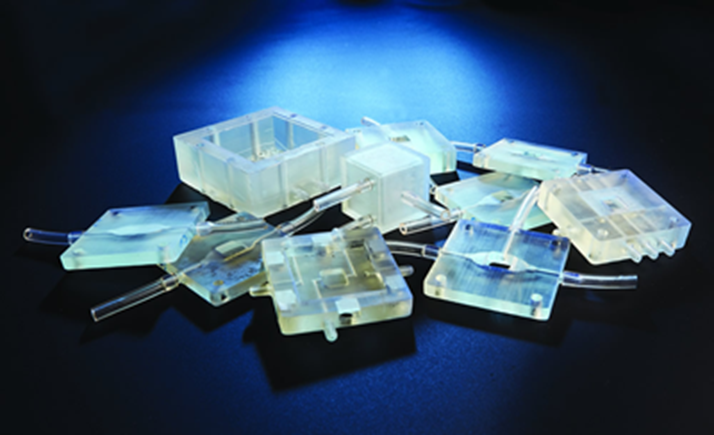
LLNL researchers have developed an ammonia production method that circumvents the Haber–Bosch process altogether. The team’s research efforts represent Livermore’s growing expertise in electrocatalytic reactor systems. The final conversion of nitrate to ammonia—reduction—is well established in scientific literature, so LLNL researchers concentrated their research efforts on the more challenging first phase (oxidation of nitrogen into nitrate), using an additively manufactured optimized anode design.
Lowering Barriers to Cleaner Ammonia Production (https://str.llnl.gov/str-december-2024/lowering-barriers)
Aditya Prajapati, Alexandra Zagalskaya, Natalie Hwee, Eric Krall, Jonathan T. Davis, Sneha A. Akhade, Jeremy T. Feaster, Chem. Commun., 2025, 61, 19796-19809 (https://doi.org/10.1039/D5CC03295D)
Aditya Prajapati, Alexandra Zagalskaya, Natalie Hwee, Jonathan T. Davis,Hui-Yun Jeong, Jennifer Moreno, Jenna Ynzunza, Sneha A. Akhade, Jeremy T. Feaster Chem Catalysis, Volume 5, Issue 2, 20 February 2025, 101220 (https://doi.org/10.1016/j.checat.2024.101220)
- Avoids costly separation processes used in current industry approaches.
- Eliminates need for energy intensive operations at elevated temperatures and pressures.
- Optimized anode design can be fabricated by DIW 3D printing
- Convert direct from air without hydrogen evolution reaction, use of toxic materials, and generation of unwanted products
• Agriculture - synthetic fertilizer ingredients
• Refrigeration and other industrial needs
Current stage of technology development:
TRL ☐ 0-2 ☒ 3-5 ☐ 5-9
LLNL has filed for patent protection on this invention.
U.S. Patent Application No. 2024/0301569 Direct Conversion of Air to Ammonia and Nitric Acid via Advanced Manufactured Electrochemical Reactors published 9/12/2024