


Harnessing nuclear radiation to generate electricity is not new. In 1913, Henry Moseley demonstrated the attainment of high potentials using radium and developed the first atomic battery. The advantage of these batteries are they have a long life and need minimal maintenance. There is a need for nuclear batteries to have higher power density so they can last even longer and/or be further miniaturized.
At LLNL, engineering and material experts are researching, developing, and prototyping 3D nuclear batteries—tiny, high-density power sources useful for remote applications, such as space or in biomedical implants, where operating at low power for longer periods of time (up to decades) is essential.
Nuclear batteries can be categorized by how the electricity is generated – thermal or non-thermal conversion. Radiovoltaic conversion devices generates electricity from ionizing radiation (e.g., alpha, beta gamma particles) that is emitted during the decay of radioactive isotopes.
Lab researchers have developed a radiovoltaic battery that contains a microstructured platform made of a semiconducting material that interacts with particles emitted from radioactive material. The particles that the radioactive material emit as it decays have sufficient energy that can be converted to electricity by the semiconductor material – creating a rugged, maintenance-free battery. The 3D-architected nature of the semiconductor platform (e.g., array of micro-pillars) increases exposure between the two materials, thus dramatically increasing power density.
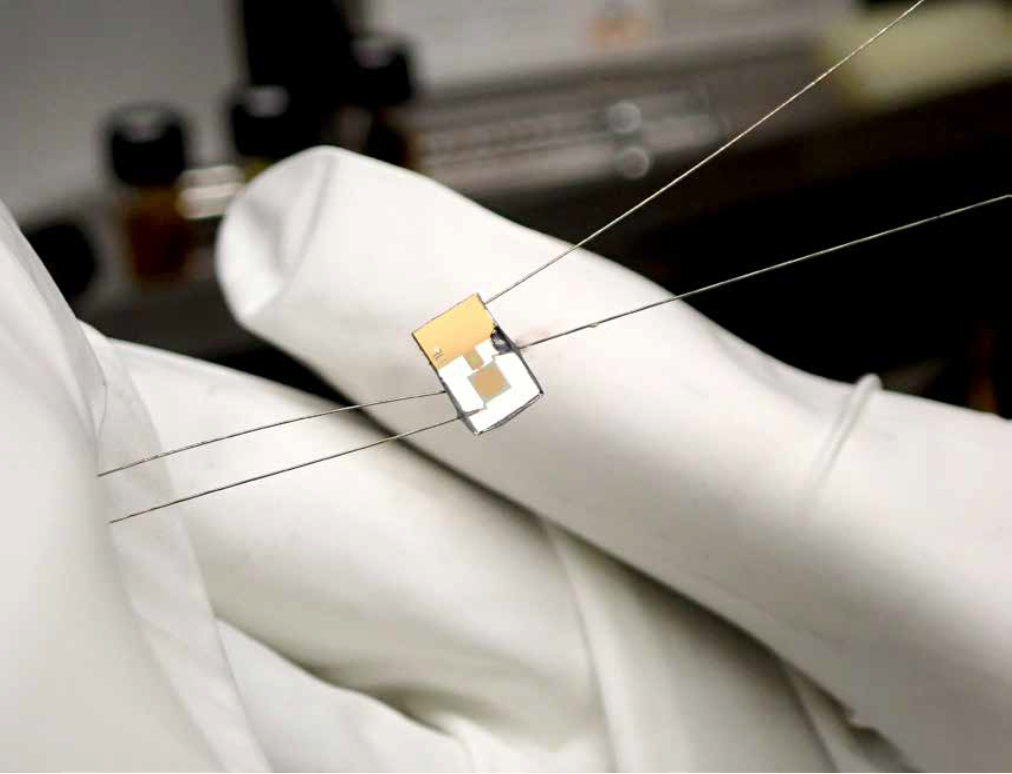
- capable of delivering sustained power over long periods
- maintenance-free power
- compact and light
- withstand extreme environments (e.g., space) that other conventional batteries or solar power are impractical
- higher energy density and high efficiency as compared to conventional planar nuclear battery which can only output microWatt power since it is limited to just the 2D surface
Commercial and government applications
- Energy storage for devices in harsh environments such as deep space probes
- Biomedical implants like pacemakers
LLNL has filed for patent protection on this invention.
U.S. Patent No. 10699820 THREE DIMENSIONAL RADIOISOTOPE BATTERY AND METHODS OF MAKING THE SAME published 6/30/2020